The read-out shows two figures that look alike but do not mean the same: target pressure and actual pressure. Then comes a second distinction, low and high, and suddenly there are four of them. Anyone who does not keep them apart will soon start replacing a pump that is perfectly good.
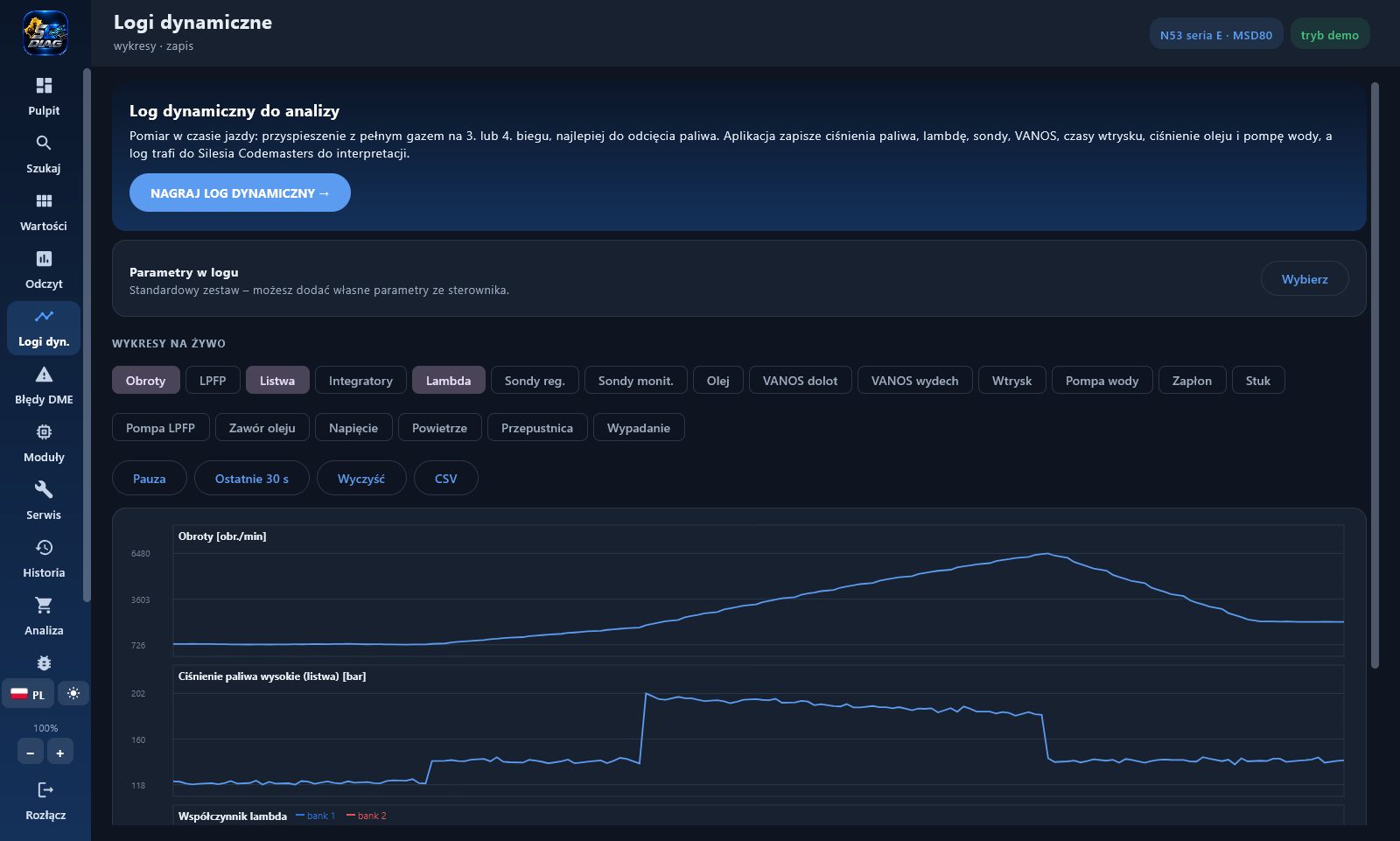
Dynamic log in SC Diag for Windows – screenshot from demo mode (simulated data, the figures are not a reference). Charts of engine speed and rail pressure, one below the other.
In short: target pressure is the value the control unit wants in the rail at a given moment. Actual pressure is what the sensor reports. What counts is whether the actual keeps up with the target, especially under load. The difference shows that the system is not delivering, but not whether the lift pump, the high-pressure pump, an injector or the sensor is at fault.
Two circuits, two figures in each
BMW engines with direct injection, both petrol and common-rail diesel, have two fuel circuits. The low-pressure pump, usually electric on a BMW, feeds fuel to the high-pressure pump on the engine, and that builds pressure in the rail that supplies the injectors. In petrol and diesel the logic is the same; only the pressure levels and the design of the regulation differ considerably. Rail values are far higher than in the low circuit, which is why “fuel pressure” without a qualifier is often a misunderstanding.
In each circuit the control unit knows a target value, which it works out from the operating point of the engine, for example from speed and load. It gets the actual value from a sensor. It regulates rail pressure with a valve that controls the output of the high-pressure pump; depending on the engine this is a metering valve on the pump side or an additional valve on the rail. The details depend on the engine and the generation.
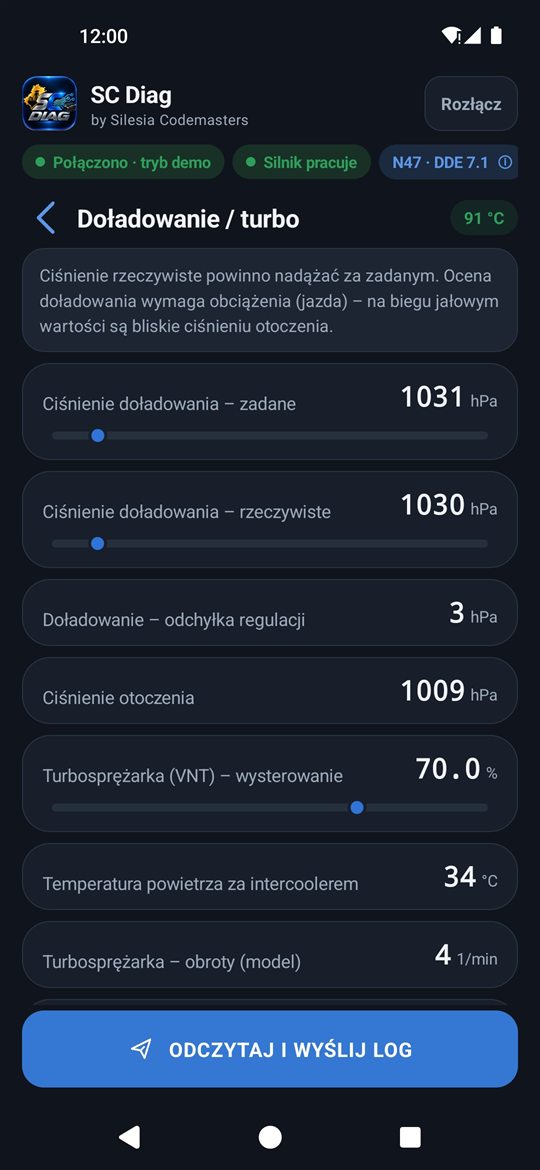
The “target and actual” pair using boost as the example (not the rail) – screenshot from demo mode (simulated data).
There is one more point that is rarely made. The actual pressure on the screen is a sensor reading, not a gauge measurement. A faulty sensor can show a figure that matches the target nicely while the real rail pressure is quite different, because the control unit regulates to whatever the sensor tells it.
Why the figures are compared over time
At idle the pump has the easiest job, and the target changes little. Many faults only appear when demand rises: on a hard push of the throttle, at higher engine speeds, in hot weather. A temporary difference when the target jumps is normal, because the regulation needs a moment. What matters is how long the difference lasts and whether it returns in the same conditions.
That is why we compare four situations: a cold start, idle, driving under load and the behaviour after the engine is switched off, when the pressure is meant to hold. A single read-out at standstill gives only a slice of the picture. It is the same with mixture, as we explain in the article on fuel trims.
Low pressure: we start there
If the low pressure drops, there is no point looking for the culprit in the engine. You check the tank, the filter, the pump's supply and its wiring. Only when the low circuit is stable and the actual rail pressure does not reach the target under load does suspicion grow on the high-pressure pump or its valve.
We have a concrete example with figures for the N43 and N53, described in the article on fuel pressure in the N43 and N53. It is our workshop criterion for those engines, dependent on the control unit version and the measuring conditions. We do not carry it over to other engines, because there the value depends on the design of the system.
Directions of cause when the actual does not keep up
Actual below target under load. The supply is the usual suspect: the low-pressure pump, the filter, air in the circuit, the electrical supply to the pump. After that the high-pressure pump and the valve that regulates its output. In its bulletin for the N54, BMW lists among the possible causes also the pressure sensors, the check valve, a faulty injector and intermittent electrical connections, so the list is longer than “the pump”.
Pressure drops after the engine is switched off. This more often points to leakage on the high-pressure side, for example an injector or a valve, than to the pump itself. We wrote about this in the article on HPFP and LPFP diagnosis.
Actual oscillates around the target. It may be a problem with the regulation, the sensor or the supply. The oscillation alone will not say which.
A drop linked to one cylinder. With that pattern suspicion grows on an injector. The rough run graph helps here, as do the injector corrections described in the articles for petrol and diesel.
What a read-out alone cannot settle
The difference between target and actual says that the system is not delivering. It does not say what exactly is failing, because the same picture comes from a leaking injector, a clogged filter, a pump valve and a faulty sensor. We do not give “how much rail pressure is good” limits here, because the value depends on the engine, the temperature and the load, and figures from forums contradict each other. When it has to be settled whether the sensor is telling the truth, the workshop compares it with an independent measurement.
How it looks in SC Diag
In SC Diag the dashboard shows fuel pressure, and the dynamic logs have separate traces for low pressure (the LPFP pump) and rail pressure next to engine speed and lambda, with saving to a CSV file. On control units that provide a target value you see it next to the actual one, as in the boost screenshot; the scope depends on the control unit data. A read-out points to a probable direction but does not replace an inspection in the workshop.
Frequently asked questions
It is the value the engine control unit wants in the rail at a given moment, worked out from the operating point of the engine. Actual pressure is the sensor reading it is compared with.
Temporarily this is normal, because the regulation needs time after a change of load. A lasting difference may point to the supply, the high-pressure pump, a valve, an injector or the sensor.
We do not give a single figure. It depends on the engine, the temperature and the load, and what counts is whether the actual keeps up with the target set by the control unit.
No. The same picture comes from a filter, the low-pressure supply, a leaking injector and a faulty sensor, so you start with the low circuit and the trace under load.
It shows what the control unit provides. The scope depends on the engine, and the target pressure is visible only where the control unit makes it available.
Check what your control unit provides
A list of 97 BMW and MINI engine control units with the read-out scope: fuel pressure, drive logs and more.
See the list of control units